
绣春刀
From an online "weight-loss hack" to protective manicures: The humble bean that connects harvest, community and home in Shandong_我的网站

A |
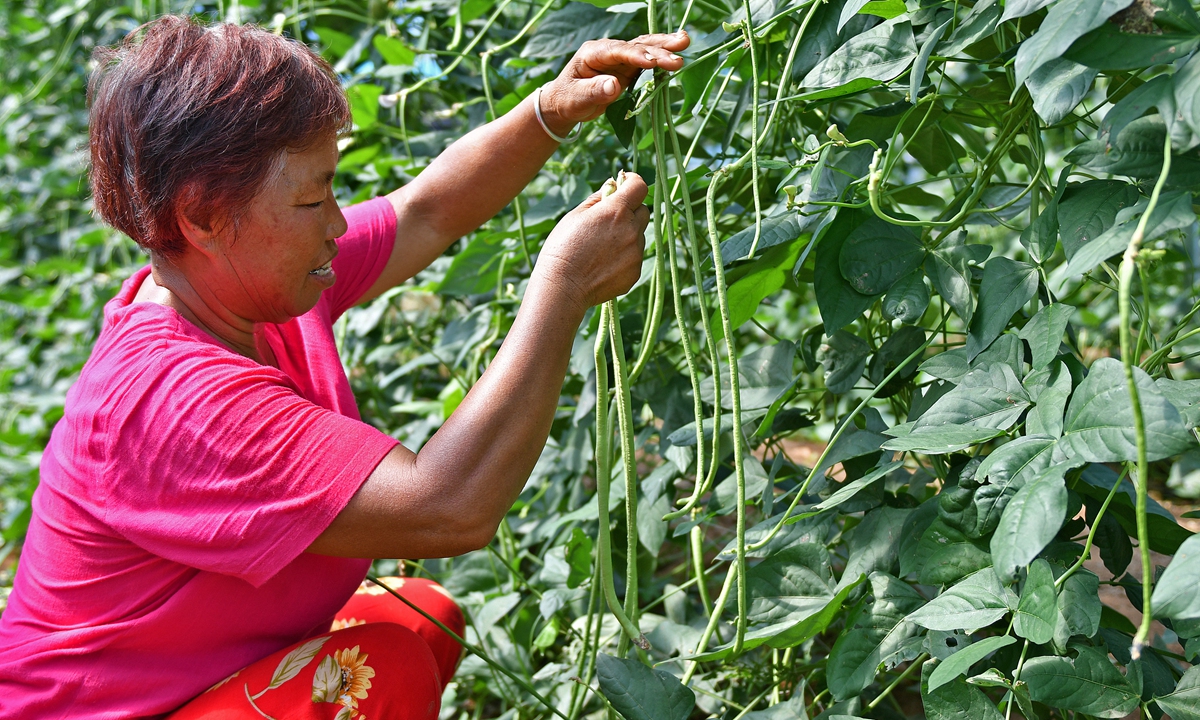
For residents of East China's Shandong Province, however, green beans have never been a miracle diet food or an internet meme. Instead, they are an unmistakable sign that summer has arrived — and, for many families, the beginning of weeks of eating them, giving them away and wondering how on earth there are still more waiting to be picked.
The season of endless beans
For Zhao Qian, a Shandong native, summer has always had a familiar color: green.
"When I was little, the moment different bean dishes started appearing on the table day after day, I knew summer had arrived," Zhao told the Global Times. "No matter how many we ate, there were always more. It was as if the vines kept producing beans overnight."
A Chinese saying goes, "Eating beans in summer is better than eating meat." Heat-loving green beans have been cultivated in China for more than one thousand years. Originally introduced from abroad, they gradually found a permanent place on Chinese dining tables thanks to their versatility, nutritional value and ability to fill hungry stomachs, according to an article published by People.cn.
Today, with the rise of greenhouse farming and an increasingly sophisticated cold-chain logistics network, fresh vegetables are available year-round across China. The old rule of eating produce only in season has largely given way to year-round abundance. Yet in Shandong, China's largest vegetable-producing province, green beans remain inseparable from summer. More than an endless seasonal harvest, they have become the taste of home for generations of locals.
One of Zhao's strongest childhood memories wasn't eating the beans, but preparing them.
"Every summer, the adults would hand me a basin full of freshly picked beans and ask me to strip off the tough strings along both sides," she recalled. "I'd sit on a little stool and work through the whole pile. It looked like an easy job, but after peeling bean after bean, my fingertips would start to hurt. By the time I finished one basin, there was always another one waiting."
For many families in Shandong, summer means an endless cycle of picking, eating and sharing green beans. In vegetable gardens, rows of trellises are soon covered in climbing vines. When the peak harvest season arrives, the beans need to be picked almost every day before they become old and fibrous. Those that cannot be finished at home are packed into bags and given to relatives, neighbors and friends.
"Your family has beans, and so does mine, but we still give them to each other," Cao Yu, a Shandong native who grew up on the Jiaodong Peninsula in East China, told the Global Times on Wednesday with a laugh.
A plentiful harvest also brings what locals jokingly call "bean freedom" to the dinner table. Sesame-dressed beans, braised beans with pork ribs and, above all, bean-filled steamed buns — a dish mentioned by almost every Shandong native interviewed by the Global Times. For many people, these dishes are no longer simply seasonal food, but the familiar taste of summer, family and hometown.
The hands that harvest summer
Behind the seemingly endless harvest is another busy summer ritual — picking. For many elderly farmers, harvesting green beans means spending hours each day moving from one trellis to another, reaching through dense vines and picking bean after bean by hand.
A nail salon in Jining, Shandong Province, recently went viral after offering free "bean-picking manicures" to residents aged 60 and above. Instead of fashionable designs or glittering decorations, the salon applies thicker, longer nail extensions that make it easier to pinch and snap off the beans while protecting fingertips from pain. A coat of colored polish is added simply to help conceal stains left by vegetable sap, according to video clips circulating on Chinese social media platforms Douyin and Sina Weibo.
The salon owner, herself the daughter of farmers, said thumb injuries and damaged fingernails are common during the bean-picking process. In videos posted on her Douyin account, many elderly women said the manicures made picking beans much easier. Even more amusingly, some older men initially refused to get a manicure, only to change their minds after hearing enthusiastic recommendations from the "grandmas' group."
For perhaps the first time, beauty took a back seat to practicality, and a manicure became another way of caring for hardworking hands.
While the internet continues to joke about undercooked beans as a shortcut to weight loss, doctors stress there is nothing amusing about eating them raw. Liang Jiajing, a clinical nutritionist at the Second Affiliated Hospital of Anhui Medical University, said raw or undercooked beans contain naturally occurring toxins that can cause nausea, vomiting, abdominal pain and diarrhea, but the toxins are destroyed through thorough cooking, according to a Jimu News report.
The internet may remember green beans as the latest viral "weight-loss hack." In Shandong, however, they tell very different stories — one of overflowing harvests, bags of beans exchanged between neighbors, family recipes passed down through generations, and hardworking hands that quietly bring the harvest to the table. Long after the online jokes fade, the taste of summer — and of home — remains.
。 8月26日讯 在阿尔瓦雷斯坚决拒绝重返英格兰赛场的情况下,《世界体育报》撰文分析了小蜘蛛这一举动的原因,并指出,这是出于家庭因素的考量。无论在哪种情况下,马德里竞技都不愿顺应球员加盟巴塞罗那足球俱乐部的意愿——尽管那是阿尔瓦雷斯梦寐以求的去处,但马竞此前已就巴萨在“受保护期”内私下接触该球员一事向有关方面提出了正式投诉。在此背景下,许多人感到不解:既然马竞给出的唯一可行方案是重返英格兰,为何阿尔瓦雷斯却坚决拒绝这一选项,即便他已决定不再留在这支绰号为“床单军团”的球队?这背后似乎有着纯粹出于家庭考量的原因。

B | 据与该球员关系密切的阿根廷记者维罗妮卡·布鲁纳蒂解释,在阿尔瓦雷斯效力曼城期间,“其部分家庭成员(例如父母)的居留许可大约两年便会到期,这意味着他们必须离开英国,或者设法改变移民身份。”西班牙与英国法律法规的差异就这一点而言,该球员目前在西班牙生活,身边有包括兄弟姐妹在内的众多亲人,而他希望维持这种生活状态。因此,除了渴望为巴萨效力(那是他偶像梅西曾效力的俱乐部)这一竞技层面的抱负外,还有个人生活方面的考量。这位阿根廷记者补充道:“阿尔瓦雷斯或恩佐的妻子可以被认定为持有工作签证者的‘受抚养伴侣’,这一身份允许伴侣在英国合法居住。”在曼城效力期间,由于针对游客的停留期限限制,安排亲人同住已是一项棘手的后勤难题。

C | 这位足球运动员希望能与大家庭成员生活在一起——然而,英国脱欧后严格的移民法规使得这一生活愿望几乎无法实现。相比之下,西班牙的移民法规提供了更大的灵活性——例如针对欧盟公民家属的居留签证(若持有双重欧洲国籍即可适用,许多阿根廷人便拥有此类国籍),或是基于家庭团聚及基于社会联系获得的居留权的许可;此外,还有允许多次入境及较长停留期的签证政策,特别是针对南美裔公民的政策。
Current article:http://l7hp1t1.linlangdouwaqiexusan.bond/list_e1e977/pfoo.html
Published on:12:50:29
我的网站相关内容
 【滨海湾堤坝,永续展览馆 Sustainable Singapore Gallery】
 乐享精彩演出 点赞美好生活
 辽宁省航空产业发展促进会成立
 普京定下新规矩:你打我民用设施,我断你粮食出口,谁也别想好过!,千羽解读,原创 普京定下新规矩:你打我民用设施,我断你粮食出口,谁也别想好过!
 高金价推动黄金消费“轻量化”
 神州G8光超笔记本预售:17.3英寸/RTX 206094999元
- ·福彩暖童心 他乡亦故乡——福彩公益金赋能铅山“天使驿站”守护流动儿童成长
- ·医药板块震荡走高 冀衡医药等多股涨停
- ·浙江义乌春节用品超前开启“羊年模式”,浙江义乌春节用品超前开启“羊年模式”
- ·8月以来碳酸锂期货涨了10余天 后市怎么走
- ·新乌鞘岭隧道进口段顺利贯通
- ·Patna Accident: बाढ़ के जमनीचक में सड़क हादसे से मातम, गांव में एक साथ उठीं चार अर्थियां; मंजर देख रो पड़े लोग
- ·泰国总理接到诈骗电话:骗子用AI冒充外国领导人来电,还发来“捐款”链接
- ·How FBI's Raid Gave Boost to Trump, Reinvigorated GOP Base Ahead of Midterms
我的网站最新内容
- ·Musk's X has taken down hundreds of Hamas-linked accounts, CEO says
- ·特朗普暗示:可出动美军干预债市
- ·来自大马“啤酒西施”爆红 带火咖啡店生意座无虚席
- ·惊!67岁老汉携9.5公斤海洛因落网,价值百万
- ·全面振兴新突破三年行动领导小组工作调度会议召开
- ·台胞浙江衢州“追剧”:走进短剧拍摄现场
- ·小米MIX Fold2 9月13日10点抢购 到底值不值得买?_Mix_屏幕
- ·文脉华章 | 总书记引经据典话廉政(三)
- ·夢想吉「星」高照
- ·China launches new energy hybrid cruise ship on Yangtze River
- ·“小米赛车”1月15日公开测试:泵送100纪念版米粉车
- ·China-CEEC cooperation opening doors
- ·多云+午后雷阵雨 天气重回夏日熟悉节奏 新台风可能已在酝酿
- ·十堰42180056号站:十余载暖心善举,以微光温暖竹溪
- ·‘전자발찌’ 차고 음주 측정 3차례 거부한 70대…실형 선고받고 재수감
- ·国足踢喀麦隆三大看点不容错过!门将位置出现新面孔,王钰栋爆发
我的网站热点内容
- ·曾走出13天12板!跨界大牛股净利润同比转亏
- ·在“倒春寒”里卖掉11万辆,零跑做对了什么?
- ·GT运动套件/黑色麂皮内饰 大众ID.3 GTX套件款将于6月14日上市
- ·全市各级工会开设职工子女假期托管班 “托”起孩子多彩假期
- ·苹果上海线下经销商将部分iPhone降价200元至300元
- ·盘活停车场空间,济南一商场门前建起体育公园
- ·范堡罗航展:几家欢喜几家愁?
- ·古特雷斯强烈谴责
- ·朝晖社区党委开展知识竞赛
- ·Sri Lanka to pass new anti-corruption laws
- ·SL seeks ILO help for digital database
- ·同比增长16.7% 理想汽车5月交付40856辆 累计交付量1301531辆
- ·【カーリング】金のカナダに「誰も認めない」と非難やまず 選手は「SNSには戻らない」
- ·Comicomment: What's behind the 'China overcapacity' hype?
- ·용산공원·서울 그린벨트, 7만3000가구 추가 공공택지서 빠진다…"경기 중심 유력"
- ·Samantha Ruth Prabhu Sets Her Priorities in 2026